

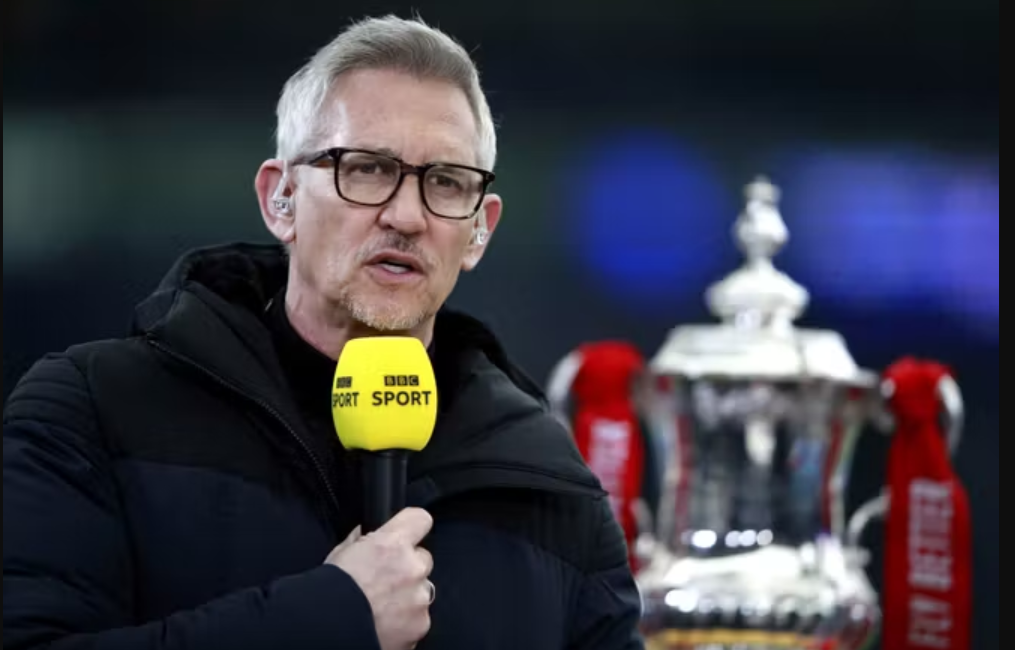
Few figures in English sport have managed to remain as influential after retirement as Gary Lineker. Known first as one of England’s most clinical strikers, Lineker later reinvented himself as one of Britain’s most recognizable sports broadcasters — and, at times, one of its most debated public voices.
A Clinical Finisher on the World Stage
Born in Leicester in 1960, Lineker began his professional career at Leicester City F.C., where his natural goal-scoring instincts quickly became evident. His intelligent movement, composure in front of goal, and ability to anticipate defenders set him apart.
His breakout on the global stage came during the 1986 FIFA World Cup in Mexico. Representing the England national football team, Lineker scored six goals, earning the tournament’s Golden Boot. At a time when English football was seeking renewed international credibility, his performances became a source of national pride.
He later played for Everton F.C., FC Barcelona, and Tottenham Hotspur F.C., maintaining a reputation for consistency and professionalism. Remarkably, throughout his professional career, Lineker was never shown a yellow or red card — a statistic often cited as a testament to his discipline and sportsmanship.
Transition to Broadcasting
After retiring from professional football, Lineker successfully transitioned into television. He became the long-time host of Match of the Day, the BBC’s flagship football highlights program. His calm delivery, insider knowledge, and understated humor helped modernize sports presentation for new generations of viewers.
Over the years, he also became one of the BBC’s highest-profile presenters, fronting coverage of major tournaments such as the FIFA World Cup and the UEFA European Championship.
Unlike many former athletes, Lineker’s credibility in broadcasting has extended beyond football analysis. His presence on television and social media has turned him into a broader cultural figure.
Public Voice and Controversy
In recent years, Lineker has become known not only for sports commentary but also for his outspoken views on social and political issues. His public statements — particularly on humanitarian and immigration matters — have sparked debate about the role of journalists and broadcasters in expressing political opinions.
At times, these interventions have led to public controversy and discussions about impartiality standards within public broadcasting. Supporters argue that he is exercising personal freedom of expression; critics question whether high-profile presenters at public institutions should maintain stricter neutrality.
The debates have reflected a wider cultural conversation in the UK about media independence, free speech, and institutional responsibility.
A Cultural Figure Beyond Football
Beyond television, Lineker has also been active in commercial ventures and philanthropy. He remains a prominent figure in British public life, with a large social media following and continued influence in discussions about sport, ethics, and society.
His dual legacy — elite athlete and media personality — places him among a select group of sports figures who successfully redefine themselves after retirement.
Legacy
Gary Lineker’s career can be divided into two distinct but equally significant chapters:
- One of England’s most prolific and respected strikers.
- A leading voice in British sports broadcasting and public discourse.
Few footballers manage to remain relevant decades after hanging up their boots. Lineker has done so not only by adapting to new roles but by engaging with the broader cultural and political landscape.
Whether admired primarily for his goals or for his commentary, his influence on British sport and media remains undeniable.