



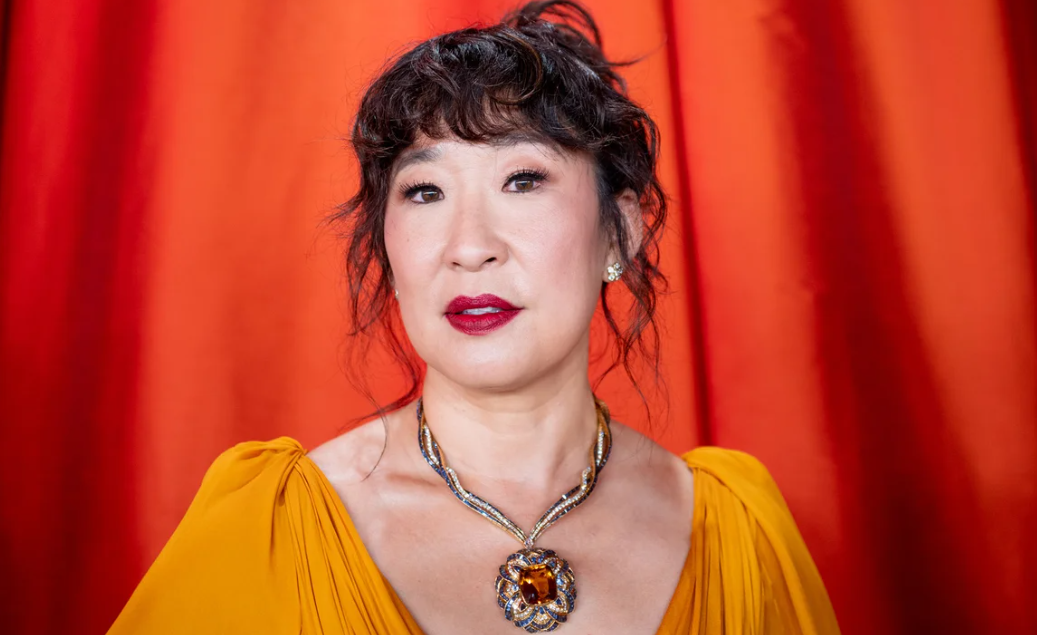
Sandra Oh is a Canadian actress whose career has been marked by a steady evolution across genres, formats, and international audiences. Born in Ottawa, Ontario, to Korean immigrant parents, Oh grew up in a household that emphasized education and discipline, yet she demonstrated an early inclination toward the arts. She trained in ballet and acting during her youth and later attended the National Theatre School of Canada, where she refined her craft and developed a foundation that would support a long and diverse career.
Her early work in Canadian film and television included roles that allowed her to explore a wide emotional range. Notably, her performance in the film Double Happiness earned her critical recognition and established her as a serious talent. Throughout the late 1990s and early 2000s, Oh appeared in a variety of supporting roles in both independent films and larger productions, gradually building a reputation for her ability to portray complex, multidimensional characters.
International recognition came with her role as Cristina Yang on the medical drama Grey’s Anatomy. Over the course of ten seasons, Oh’s portrayal of the ambitious and highly skilled surgeon became one of the defining elements of the series. Cristina Yang was characterized by her intelligence, competitiveness, and emotional restraint, yet also displayed vulnerability and growth over time. Oh’s performance resonated with audiences and critics alike, earning her numerous award nominations and a Golden Globe win. The character also became culturally significant, particularly for representation, as one of the few Asian women in a leading role on a major American television series.
After departing Grey’s Anatomy, Oh took a deliberate approach to selecting roles, seeking projects that offered new creative challenges. This approach led to her role in Killing Eve, where she portrayed Eve Polastri, a British intelligence officer drawn into a psychologically complex pursuit of an international assassin. The series received widespread acclaim for its writing and performances, and Oh’s role was particularly noted for its balance of tension, dark humor, and emotional depth. Her performance earned her multiple awards and further cemented her status as a leading actress in contemporary television.
In addition to her work on screen, Sandra Oh has remained active in theater, returning periodically to stage productions to maintain a connection to live performance. This aspect of her career reflects a broader commitment to the craft of acting beyond commercial success. She has also lent her voice to animated projects and participated in various artistic collaborations, demonstrating her versatility.
Oh’s influence extends beyond her performances. She has been a prominent advocate for diversity and representation in the entertainment industry, often speaking about the importance of inclusive storytelling and opportunities for underrepresented groups. Her career trajectory illustrates both the challenges and progress within the industry regarding representation.
Overall, Sandra Oh’s body of work reflects a consistent dedication to authenticity, complexity, and artistic growth. Her performances continue to resonate with audiences globally, and her contributions to the industry have had a lasting cultural impact.